If you’ve ever walked through a mineral processing plant—big, loud, and pulsing with the thrum of flotation cells that separate valuable ore from gangue—you’ve probably heard dithiocarbamates mentioned more than once. As a supplier of these collectors, I get asked this question all the time: “What makes one dithiocarbamate homologue different from another?” It’s a fair question, because not all of these compounds are created equal, and picking the right one can make or break a flotation process. I’ve spent the last 12 years selling and troubleshooting these chemicals, and I’ve learned that the differences aren’t just in their chemical names—they show up in plant performance, cost, and even how easy they are to handle. Let’s break it down. Dithiocarbamate Collectors
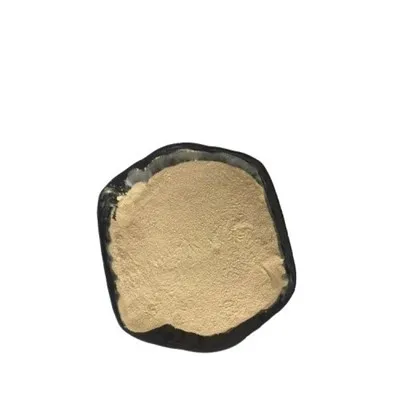
First, a quick refresher for anyone who’s new to this. Dithiocarbamate collectors are a staple in sulfide mineral flotation. Their job is simple in theory: stick to the surface of valuable minerals like copper, lead, or zinc sulfides, make the surface water-repellent, and then attach to air bubbles that float the minerals out of the ore. The basic structure of a dithiocarbamate is a central carbon atom double-bonded to two sulfur atoms, single-bonded to a nitrogen atom, and the nitrogen is attached to two hydrocarbon groups. Those hydrocarbon groups are where the homologues differ. Homologues are compounds in the same chemical family that have the same functional group, but different lengths or branching of those hydrocarbon chains. So, for example, one might have two methyl groups (CH₃) on the nitrogen, another two ethyl groups (C₂H₅), and another two propyl groups (C₃H₇). The tiny changes to those chains cause massive changes to how the collector behaves in water, how well it binds to minerals, and how selective it is.
Let’s start with the shortest-chain homologues, dimethyl dithiocarbamate (DMDTC) and diethyl dithiocarbamate (DEDDTC). These are the workhorses, the ones most plants reach for first when they’re new to dithiocarbamates. What’s their biggest trait? They’re highly water-soluble. If you mix them with water, they dissolve almost completely, no messy emulsions or need for extra solvents. That makes them easy to feed into a process plant—no extra mixing tanks, no risk of them clogging pipes when it’s cold. But here’s the trade-off: because their hydrocarbon chains are short, they’re pretty small molecules. That means they tend to bind to a lot of things, not just the valuable sulfides. They’ll stick to gangue minerals like pyrite more easily than longer-chain collectors, which sounds good, but it’s not. Pyrite is usually a problem mineral—you don’t want it floating with your copper, because that makes the final ore concentrate lower grade. So while DMDTC and DEDDTC are cheap and easy to handle, they’re less selective. I had a customer in Arizona a few years back who was using DEDDTC for copper flotation and getting a concentrate with 12% copper, but 8% pyrite. He tried adding extra depressant to fix it, but that drove up his costs by 18%. When we switched him to a slightly longer-chain homologue, di-isopropyl dithiocarbamate, he got the same copper recovery (around 89%) but cut the pyrite contamination by almost half. That’s the kind of win that makes knowing your homologues matter.
Next up, the mid-chain homologues: di-isopropyl dithiocarbamate (DIPDTC) and di-n-propyl dithiocarbamate (DNPDTC). These are the most popular homologues for base metal flotation these days, and for good reason. The isopropyl and n-propyl chains are just a little longer than ethyl, and their shape is a bit bulkier. That bulk changes how the collector binds to mineral surfaces. Valuable sulfides like galena (lead sulfide) and chalcopyrite (copper sulfide) have slightly different surface charges and atomic spacing than pyrite. The mid-chain collectors fit better to the valuable sulfide surfaces, so they stick there more tightly, and they don’t bind as well to pyrite. That’s higher selectivity, which means cleaner concentrates, less downstream processing. Another thing I’ve noticed about mid-chain homologues is their tolerance for hard water. A lot of mining operations are in areas with water that’s high in calcium and magnesium ions—hard water. Short-chain collectors can sometimes react with those ions to form insoluble salts, which means the collector precipitates out of the water before it even reaches the flotation cells. That wastes chemical and kills performance. Mid-chain homologues are much more resistant to that. I had a mine in Peru that was using short-chain dithiocarbamates and losing 22% of their collector to precipitation in their hard process water. Switching to DIPDTC cut that loss to less than 5%. That’s a huge saving, especially for operations that use thousands of gallons of process water a day.
Then there are the longer-chain homologues, di-butyl dithiocarbamate (DBDTC) and di-iso-amyl dithiocarbamate (DIADTC). These are the heavier hitters, used mostly for flotation of less reactive sulfides, or for processing ores that are very fine-grained. The longer hydrocarbon chains make these collectors much less water-soluble than the shorter ones. They don’t dissolve completely—they form a fine suspension or emulsion when mixed with water. That sounds like a downside, but it’s actually a plus for certain ores. The longer chains make the collector more hydrophobic once it’s bound to the mineral surface, so the mineral bubbles attach more strongly, and you can get good flotation recovery even for sulfides that don’t react well with shorter collectors. The catch with longer-chain homologues is they’re harder to handle. You can’t just pump them straight from a drum like DEDDTC; you need a mixing tank to emulsify them with water before feeding, or you risk them settling out in the lines. They’re also more expensive, because the longer hydrocarbon chains cost more to manufacture. But for the right ore, they’re worth every penny. I had a gold mine in Nevada that was processing a refractory ore where the gold was locked in pyrite. They were using a combination of DEDDTC and xanthate, but only recovering 68% of the gold. When they switched to DIADTC as the primary collector, gold recovery jumped to 82%, and they increased their annual production by 12,000 ounces—enough to pay for the new collector in the first three months.
Now, it’s not just chain length that differentiates homologues—branching matters too. You can have two homologues with the same number of carbon atoms, but one is a straight (n-) chain and the other is branched (iso-). For example, di-n-propyl is a straight three-carbon chain on each nitrogen, while di-isopropyl is a branched chain where the middle carbon has a methyl group sticking out. That branching affects how the molecule fits on the mineral surface. Straight chains tend to pack more tightly on the surface, which can lead to stronger binding, but they’re sometimes less selective than branched chains. Branched chains are bulkier, so they bind less to the small, uneven surfaces on gangue minerals, making them more selective even at the same chain length. I had a customer in Canada who was using di-n-butyl for zinc flotation, but getting 5% lead contamination in his zinc concentrate. Switching to di-isobutyl, which is branched, cut the lead contamination to 1.2% without losing any zinc recovery. That’s another example of how small structural changes make big differences.
There’s also the question of purity and formulation. A lot of people don’t realize that different homologues aren’t always sold as pure compounds. Some suppliers mix them with other chemicals to make them more water-soluble, or to boost their selectivity. For example, a common formulation is a blend of DEDDTC and DIPDTC—you get the easy handling of the short chain, with the better selectivity of the mid chain. As a supplier, I test every batch of dithiocarbamates we sell to make sure the homologue content is accurate, because even a small amount of impurity can mess with performance. I once had a customer who bought a cheaper dithiocarbamate from a local supplier that turned out to be 30% methyl isobutyl carbinol (MIBC), a frother, instead of pure di-isopropyl. He thought he was getting a better collector, but the extra frother made the flotation cells overflow, and he lost 10% of his copper to the tailings. That’s why it’s important to work with a supplier you can trust, not just pick the cheapest product.
Another difference is pH stability. Sulfide flotation is usually done at a slightly alkaline pH, around 8 to 11, but some operations work at higher or lower pH. Short-chain homologues tend to be less stable at higher pH—they can break down and stop working if the pH gets above 11. Mid and long-chain homologues are stable over a wider pH range, up to 12 or even higher. That’s a big deal for mines that use high lime concentrations to depress pyrite. I had a mine in Chile that was operating at pH 11.5, and their short-chain collector was degrading so fast they had to add 25% more to keep up. Switching to di-isopropyl dithiocarbamate cut the required dosage by 15% because it didn’t break down.
Let’s talk about real-world application, because this isn’t just chemistry textbook stuff. I’ve spent hundreds of hours at plant sites, watching how different homologues perform under different conditions. If you’re processing a high-grade copper ore with low pyrite contamination, a short-chain homologue like DEDDTC will work fine—it’s cheap, easy to use, and you won’t have to worry about extra selectivity. But if you’re dealing with a low-grade ore that has a lot of pyrite, you’ll want a mid-chain branched homologue like di-isopropyl to get cleaner concentrates. If you’re working with fine-grained, refractory gold or silver sulfides, a longer-chain homologue like iso-amyl will give you the recovery you need. The worst mistake I see customers make is using a one-size-fits-all approach—they buy the cheapest dithiocarbamate they can find, regardless of their ore type. That rarely works out.
As someone who’s been in this industry for a long time, I always tell customers to test their ore with different homologues before making a big switch. Most suppliers will do small-scale flotation tests for free, and that’s the best way to see what works. I’ve had customers come to me saying, “This collector isn’t working,” and after testing three different homologues, we find one that doubles their recovery. It’s not rocket science, but it takes knowing what each homologue brings to the table.
At the end of the day, dithiocarbamate homologues differ in water solubility, selectivity, pH stability, hardness tolerance, handling requirements, and cost. The right choice depends on your ore type, process water quality, flotation pH, and your goals (is it high recovery, high grade, or low cost?). If you’re struggling with flotation performance, getting poor concentrate grades, or wasting too much chemical, it might be time to take a closer look at the dithiocarbamate homologue you’re using. I’ve helped dozens of mines work through this exact issue, and I’d be happy to help you too. If you’re interested in testing different homologues for your process, don’t hesitate to reach out and discuss your specific needs.
Xanthate References
Hu, X., et al. (2019). “Structure-activity relationship of dithiocarbamate collectors for sulfide mineral flotation.” International Journal of Mineral Processing, 188, 104132.
Nagaraj, D. R., & Farinato, R. S. (2016). “The role of chemical structure in the performance of sulfide mineral flotation collectors.” Minerals Engineering, 96-97, 112-121.
Zhang, L., et al. (2021). “Effect of hydrocarbon chain branching on the selectivity of dithiocarbamate collectors for copper flotation.” Separation and Purification Technology, 263, 118365.
Bitop Bihope Qingdao Mining Co., Ltd
Bitop Bihope Qingdao Mining Co., Ltd. is one of the most professional sulfur and nitrogen manufacturers and suppliers in China, featured by quality products and low price. Please rest assured to buy discount sulfur and nitrogen in stock here and get quotation from our factory. Customized orders are welcome.
Address: Room 410, 4th Floor, Shengquan Business Building, No. 263 Yitong Road, Huangdao District, Qingdao City, Shandong Province, China
E-mail: btbhmining@163.com
WebSite: https://www.btbhmining.com/
