What Are the Costs of Installing Bridge Guardrails?
If you’ve ever driven over a bridge and glanced at the steel rails lining its edges, you’ve probably never stopped to think about how much it costs to put those guardrails there. As someone who’s spent 12 years in the bridge guardrails supply business—meeting engineers, contractors, and transportation department officials across the country—I can tell you it’s not just a simple purchase. It’s a process that balances safety, materials, labor, and long-term value. Today, I want to break down those costs the way I do with every new client, no fine print and no confusing jargon. Bridge Guardrails
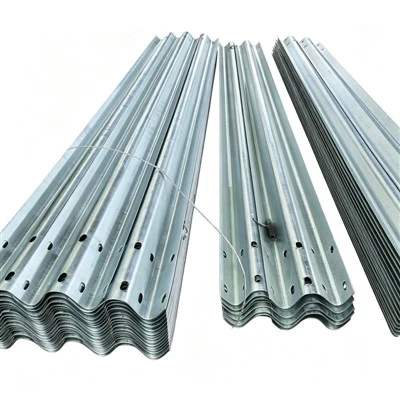
Let’s start with the basics: bridge guardrails aren’t one-size-fits-all. A small overpass in a rural area has very different needs than a major urban interstate bridge that carries thousands of cars daily. That variation is the biggest driver of cost, right from the start. Let’s dive into each key component.
First, there’s the material cost. Most of the guardrails we supply are hot-dip galvanized steel, and for good reason—it’s durable, resists corrosion, and meets federal safety standards. But steel prices fluctuate, sometimes by hundreds of dollars a ton in a single quarter. A few years back, supply chain issues pushed steel costs up 20% in six months, which rippled through every project. For a standard 10-foot section of W-beam guardrail (the most common type), the steel material itself runs about $150 to $250 per section. If the bridge is in a coastal area, we might suggest weathering steel or aluminum instead, since salt air eats away at regular steel. That adds another 15% to 30% to the material cost, but it saves money in the long run because it doesn’t need frequent repairs. We’ve seen coastal projects where aluminum guardrail cut maintenance costs by 40% over 10 years, so it’s an investment, not just an expense.
Then there’s the hardware—bolts, brackets, posts, end caps, and anchors. You can’t mount a guardrail without these, and skimping on them is a mistake. We once worked with a contractor who tried to use cheap, uncoated bolts on a small bridge; within two years, the bolts had rusted so badly the guardrail swayed in high winds. That ended up costing twice as much to fix as if he’d used our standard stainless steel hardware. For every 10 sections of guardrail, hardware adds about $300 to $500. It’s a small detail, but one that keeps the whole system safe.
Next comes the foundation work. Guardrails aren’t just bolted to the bridge deck—they need solid anchor points. For concrete bridges, that usually means drilling holes in the deck, inserting anchor bolts, and securing the posts. For steel bridges, we weld posts directly to the bridge’s structural beams. The cost here depends entirely on the bridge’s condition and design. A flat, well-maintained concrete deck might take two hours per section to anchor, costing around $200 in labor for that work. But if the deck has cracks or uneven surfaces, we have to reinforce the anchors with epoxy, which adds $100 to $150 per section in materials and extra labor. On a curved bridge, the posts have to be set at precise angles to keep the guardrail aligned, which adds more time and skill to the installation.
Labor is where a lot of first-time project owners underestimate costs. Installing bridge guardrails isn’t like putting a fence in your backyard—it requires specialized crews who understand bridge safety protocols. You can’t just climb onto a bridge in the middle of the day; you have to work around traffic, set up temporary barriers, and follow strict OSHA guidelines. A typical installation crew for a bridge this size earns about $45 to $65 per hour per worker, and a project might take 3 to 5 days depending on length. For a 500-foot bridge, that’s 10 to 15 worker days, translating to $7,000 to $12,000 in labor. But here’s the thing: cutting corners on labor by hiring unskilled crews leads to mistakes. We’ve had clients come to us after a cheaper installation where guardrails were misaligned, and they had to pay double to fix the error. Good labor is worth the cost, even if it seems high upfront.
Then there are site-specific factors that can blow the budget if you’re not prepared. For example, if the bridge is over a busy highway, you need to hire a traffic control company to manage detours and closures. That can add $5,000 to $15,000 to the project, depending on the highway’s volume. If the bridge is in a remote area, transporting materials and crews takes longer, so travel and per diem costs go up. Last year, we did a project on a mountain bridge in a national park, and the crew had to hike in some tools, which added 20% to the overall cost. Another big one is permits. Most municipalities require permits for bridge modifications, and those can cost $500 to $2,000, plus time for inspections. I always advise clients to budget for permits early, because delays waiting for approval can add weeks to the project timeline and extra labor costs.
Wait, but what about long-term costs? A lot of people only look at the upfront price, but bridge guardrails need maintenance, and that’s part of the total cost. Galvanized steel guardrail needs a wash every 2 to 3 years to remove road salt and debris, costing $500 to $1,000 per mile. If you have a coastal bridge, that wash might be every year. You also have to replace any sections damaged by accidents—even a small fender bender can bend a W-beam, and replacing that section costs $300 to $500 in materials plus $200 in labor. Over 20 years, those maintenance and replacement costs can add up to 30% to 50% of the initial installation cost. That’s why we always work with clients to choose materials that balance upfront cost and long-term savings. For example, our high-strength galvanized steel guardrail has a 50-year lifespan, so even if it’s 10% more expensive upfront, you won’t have to replace it mid-bridge’s life.
Let me give you a real example to make this concrete. Last year, a county transportation department came to us for a bridge over a small river, 200 feet long, rural location. Here’s how we broke down the cost: material (standard W-beam, galvanized) was $4,200, hardware was $1,200, foundation work (simple concrete deck, no extra reinforcement) was $3,000, labor (two workers, 4 days, traffic control for a rural road) was $8,000, permits and inspections were $800. Total upfront cost: $17,200. For that same length, if they’d chosen aluminum, the material would have been $5,500, but maintenance over 20 years would be $1,500 less than steel (since aluminum resists corrosion better). So even though upfront was higher, total cost over 20 years was almost the same. That’s the kind of calculation we walk every client through.
I should also mention regulatory and compliance costs. In the U.S., bridge guardrails have to meet Manual for Assessing Safety Hardware (MASH) standards, set by the Federal Highway Administration. If you use a guardrail that’s not MASH-compliant, you can’t get permits, and you risk fines if an accident happens and it’s found to be non-compliant. All the guardrails we supply are MASH-certified, which means the material and design have passed crash tests. That adds a small premium to the material cost—about 5%—but it’s non-negotiable. Cutting corners here isn’t just illegal; it’s dangerous. A few years ago, a small town tried to install non-compliant guardrails on a bridge, and after a crash that killed a driver, they had to remove and replace the entire system at a cost three times what the compliant ones would have been. It’s a mistake no one wants to make.
Another factor: project scale. If you’re doing a single small bridge, costs are higher per foot than if you’re doing a series of bridges for a state transportation department. We offer bulk discounts for large projects, because it reduces our material processing time and installation setup costs. For example, a single bridge might cost $86 per linear foot, but a 10-bridge project could drop that to $68 per linear foot. That’s why I always tell clients to group their projects if they can—even if it means waiting a few months to install all the bridges at once, the savings are significant.
Let’s talk about hidden costs that catch people off guard. One big one is bridge elevation. If a bridge is high over a valley, the guardrail has to be taller to meet safety standards (usually 42 inches for bridges over 10 feet high). That taller rail uses more steel, so material cost goes up. Also, working at height requires special fall protection equipment for crews, which adds $100 to $200 per day in rental costs. We had a project on a 50-foot-high bridge last year, and the fall protection added $1,800 to the labor cost. Another hidden cost is landscaping. Some urban bridges are in areas with sidewalks or green spaces, so installing guardrail might require modifying surrounding areas—like adjusting sidewalk curbs or removing small trees to make space for posts. That can add $2,000 to $5,000 depending on the site.
Now, let’s get to the bottom line: what’s a typical total cost per linear foot for a standard bridge guardrail installation, all in? For a rural, 200-foot concrete bridge, that’s usually $70 to $90 per linear foot. For a major urban interstate bridge that’s 1,000 feet long, with traffic control, permits, and specialized materials, that can be $120 to $180 per linear foot. The difference is all in those site-specific factors I mentioned. If you’re in a coastal area with salt exposure, add 20% to that range, and if you’re using a premium material like stainless steel, add another 30%.
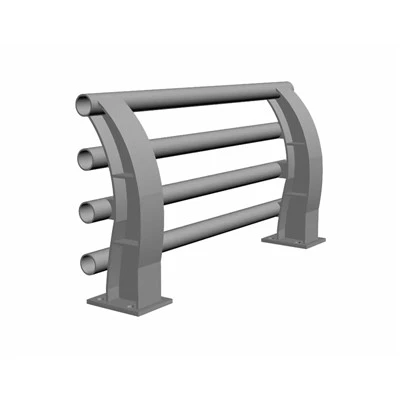
I’ve been in this business long enough to see clients make every possible mistake when budgeting for guardrails. The one I see most often is focusing only on the lowest upfront cost, without considering long-term safety and maintenance. A cheap guardrail might save you a few thousand dollars now, but if it fails in a crash, or needs constant repairs, you’ll end up paying far more later. That’s why our approach is to be transparent with every cost, explain the trade-offs, and help you choose a solution that fits your budget without sacrificing safety.
Bridge Guardrails If you’re planning a bridge project and want a clear, accurate cost breakdown, I’m here to help. We’ve worked on thousands of projects, from small rural overpasses to major urban bridges, and we can walk you through every component, answer your questions, and give you a tailored quote that includes all costs—no hidden fees, no fine print. Whether you’re a county transportation department, a contractor, or a property owner with a private bridge, we can supply the guardrails and coordinate installation to meet your timeline and budget. Don’t guess at the costs—reach out, and let’s work together to get a solution that’s safe, durable, and affordable.
References
- Federal Highway Administration. (2020). Manual for Assessing Safety Hardware (MASH). U.S. Department of Transportation.
- American Road & Transportation Builders Association. (2022). Bridge Guardrail Cost Trends Report. ARTBA Publications.
- National Institute for Occupational Safety and Health. (2021). Safety Guidelines for Bridge Construction Installation. NIOSH Safety Standards Series.
- Steel Market Update. (2023). Hot-Dip Galvanized Steel Pricing and Supply Chain Analysis. Steel Market Update Reports.
- International Association of Bridge, Structural, Ornamental, and Reinforcing Iron Workers. (2022). Labor Costs for Bridge Installation Projects. IABSOIW Technical Bulletin.
Guanxian Hongrong Traffic Facilities Co., Ltd.
As one of the most professional bridge guardrails manufacturers and suppliers in China, we also support customized service. Please feel free to wholesale bulk durable bridge guardrails in stock here from our factory. Welcome to contact us for quotation.
Address: South side of the road, 100 meters west of the intersection of Baiyang Road and Donghuan Road, Chongwen Subdistrict, Guan County, Liaocheng City, Shandong Province
E-mail: hongrongli568@163.com
WebSite: https://www.hongrongguardrail.com/
