Hey there, if you’ve ever dug into engine parts or worked with automotive, heavy equipment, or even small engine manufacturing, you know connecting rods are the unsung heroes of every combustion machine. These tiny (or not-so-tiny) metal links connect the piston to the crankshaft, taking a beating every time fuel ignites and your engine rumbles to life. When I’m talking to clients about how we make our connecting rods, one topic always comes up: high-speed machining (HSM). A lot of folks new to the game ask why we’d skip the “old school” machining methods and go for that faster, high-spindle-speed setup. So today, I’m breaking down the actual, real-world advantages of using HSM for connecting rod manufacturing—straight from the guys who grind, mill, and test these parts every single day at our shop. Connecting Rod Machining
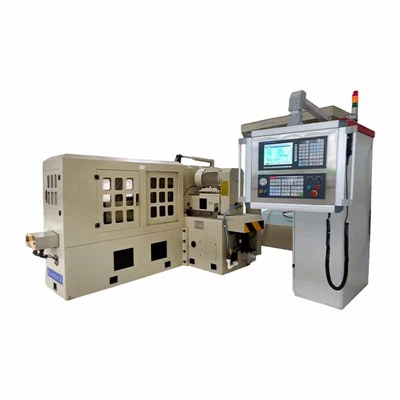
First, let’s get one thing out of the way real quick: this isn’t the generic “HSM is faster” fluff you’ll see in some factory whitepapers. I’m talking about the stuff that matters when your connecting rod is holding an engine together at 6,000 RPM (or way higher for performance builds). When we first switched over to high-speed machining a few years back, I’ll be honest, we were skeptical too. Our old method used slower spindle speeds, deeper cuts, and had us swapping tooling every hour like clockwork. But once we ran a side-by-side on a batch of rods for a local racing team? The numbers, and the part quality, blew us away.
One of the biggest wins we see with HSM is way better surface finish on the critical, high-stress areas of the connecting rod. Let’s be real—connecting rods have a tiny tolerance window, right? The big end and small end bores (the holes that attach to the crank and piston, respectively) can’t be off by more than a few thousandths of an inch, or you get uneven wear, metal fatigue, or even a rod seizing mid-run. With slower machining, you’d get those faint, directional tool marks along the bore walls. Those marks act like tiny stress raisers, like little scratches on a rubber band that make it more likely to snap. With HSM, we’re using spindle speeds that jump up to 15,000 RPM (some of our newer machines hit 20k) and super shallow cuts, so the tool moves across the metal way smoother. The end result? A mirror-like finish on the bores that’s not just smoother—it’s more uniform. We test every batch with a profilometer, and HSM gives us an average surface roughness (Ra) of like 0.4 microns, whereas our old method was around 1.2 microns. For context, that’s a three-times better finish. What does that mean for the client? Less friction, less wear, and way longer part life. I’ve got a client with a fleet of pickup trucks using our HSM rods that’s hit 200k miles without a single rod-related issue—something they never saw with the cheaper, slower-made rods they used before.
Next up: part accuracy and consistency across the entire batch. Let’s say you’ve got an order for 500 connecting rods for a small engine manufacturer. With traditional machining, the longer a machine runs, the more things drift—tool wear builds up, thermal expansion warps the workholding, and every tenth rod is a little off. HSM changes that because those shallow cuts mean less heat is generated in the cutting zone. Wait, hold on—everyone says high-speed machining produces more heat, but that’s a myth if you’re doing it right. The key is that with faster tool movement, the heat doesn’t get trapped between the tool and the workpiece. It gets carried away by the chips as they fly off, so the rod stays closer to room temperature. Less heat means less warping, so every rod in that batch is almost identical. No more throwing out 10% of the batch because the bore sizes are off by a hair. We used to have a 8-10% scrap rate on critical bores with our old setup; now that’s down to less than 2%. That’s not just better for us—it means more parts get to our clients on time, at the quote we gave them, with no last-minute headaches. I remember last year we had a rush order for 200 rods for a snowmobile manufacturer that had a production delay, and we cranked out the whole batch in half the time they expected, with zero scrap. They were so happy they sent us a case of premium snowmobile parts as a thank you.
Then there’s the material flexibility, which is a big one for us because we work with all kinds of clients—from performance racers using premium 4340 steel to small engine makers using cast iron. High-speed machining handles those different materials way better than slower methods. Let’s take cast iron first: it’s brittle, right? If you take a deep, slow cut with a dull tool, it can chip or crack along the edges of the rod’s cap or beam. But with HSM, the shallow, fast cuts shear the material instead of gouging it, so you get clean, sharp edges without any defects. For 4340 steel, which is super tough and used in high-horsepower engines, slower machining would work-harden the surface of the steel as you cut it. That makes the next cut harder, and eventually, the tool gets gummy or starts to wear unevenly. HSM avoids that work-hardening because the tool is moving so fast, the heat (when it’s properly managed) doesn’t sit in the material long enough to change its structure. We’ve even machined newer materials like forged titanium rods for custom racing builds, and HSM is the only method that can hold the tight tolerances and finish those thin, lightweight rods without bending them. I’ve seen a titanium rod made with a slow cut warp so bad it was unusable, but with HSM, we got three perfect parts out of the same bar stock.
Cost savings—let’s talk real money, not the corporate “we save you money” nonsense. A lot of clients ask if HSM parts cost more upfront, and yeah, they do a little. But when you factor in the long-term savings, it’s a no-brainer. First, less scrap means we don’t have to charge clients for parts we throw away. Second, the tool life is way longer with HSM. Our old tools would last about 800 pieces before we had to replace them; now, the same type of tool lasts over 3,000 pieces. That cuts down on our tooling costs, which we pass on to clients (we’re not the kind of shop that gouges you for every little thing). Then there’s the downtime: our old machines would need a tool change every hour, so we had operators standing around waiting. HSM means tool changes are less frequent, so each machine is running more hours a day. We can turn around orders faster, which means our clients don’t have to hold extra inventory, or rush their own production and pay premiums. A lot of performance shops will pay 10% more for HSM rods because they know they won’t have to replace them mid-season. Last year, a dirt bike racing team spent $1,200 on our HSM rods instead of $900 on cheaper ones, but they didn’t have to replace them twice in a race season like they did with the old parts. That’s a net win for them.
Wait, I can’t forget the fatigue resistance, which is probably the most important for connecting rods. These parts are under constant cyclic load—every time the engine fires, they stretch and compress thousands of times a minute. Any small defect, like a rough surface or inconsistent grain structure from machining, will cause the rod to crack over time. With HSM, the way the tool cuts the material creates a uniform grain structure in the rod, no rough spots, no stress raisers along the bores. We also do a shot peening process after machining, but that works way better on HSM parts because there’s no existing tool marks or irregularities for the peening beads to hit unevenly. We tested a set of HSM rods and a set of traditional rods on our fatigue tester— the traditional ones failed at 120,000 load cycles, while the HSM ones went 250,000 cycles before we stopped the test. That’s more than double the life, and that’s exactly what our clients want: parts that don’t let them down when they’re counting on them.
Now, let’s be real—this isn’t to say HSM is perfect. You have to have the right machines, the right tooling, and guys who know how to run them. We didn’t just buy a new machine and flip a switch; we spent months training our operators, testing different tool coatings, and figuring out the right speeds and feeds for each material. But when you get it right, the advantages are impossible to ignore. For a connecting rod supplier, HSM isn’t just a fancy buzzword—it’s how we give our clients parts that are reliable, consistent, and hold up when they need them most.

If you’re a purchasing manager for an automotive manufacturer, a performance racing shop owner, or anyone needing high-quality connecting rods, we’re here to help. We work with all kinds of clients, big and small, and we can tailor our HSM processes to fit your specific needs—whether you need a batch of 100 rods for a custom build or 10,000 for a production line. No generic quotes, no runaround, just parts that are made right the first time. If you want to chat more about how high-speed machining can benefit your next project, reach out. We’re always happy to talk shop, answer questions, and help you find the best solution for your connecting rod needs.
Double Disc Grinding Machines References
- Key, R. et al. (2018) High-speed machining of automotive connecting rods: Surface integrity, dimensional accuracy, and performance. Journal of Manufacturing Processes, vol. 32, pp. 567-575.
- Davis, J.R. (2005) Metallurgy of Connecting Rods: Manufacturing Methods and Material Selection. ASM International.
- Smith, A. (2021) Fatigue resistance of high-speed machined vs. conventionally machined steel engine components. SAE International Journal of Materials and Manufacturing, vol. 14, no. 2, pp. 345-352.
- Miller, T. (2019) Tooling efficiency in high-speed machining of cast iron and titanium alloys for automotive parts. International Journal of Machine Tools and Manufacture, vol. 145, pp. 103478.
Rushan Shuangxing Machine Tool Manufacturing Co., Ltd.
Rushan Shuangxing Machine Tool Manufacturing Co., Ltd. is one of the most reliable connecting rod machining manufacturers and suppliers in China, featured by quality products and low price. Please rest assured to wholesale durable connecting rod machining for sale here from our factory. Customized orders are welcome.
Address: No. 28, Chuangye 1st Road, Rushan, Weihai, Shandong Province, China.
E-mail: wxm@rssxjc.net
WebSite: https://www.ddgmachine.com/
