If you’ve ever stood in the cleaning supply aisle, holding a fresh mop head in one hand and a metal mop frame in the other, wondering, “Does this actually fit?” you’re not alone. For over a decade, I’ve run a mop accessories supply business—walking trade shows, taking calls from residential janitors, mid-sized facility managers, and even Airbnb hosts who’ve learned the hard way that not every mop part works with every other part. I’ve had managers bring in mismatched pairs of frayed mop heads and wobbly frames, begging me to make their current setup work, only to explain that compatibility isn’t a random guess—it’s rooted in engineering, materials, and industry standards most casual cleaners never learn. Let’s break down the question no one asks enough: Can I use all mop accessories with any mop? Spoiler: No, but with the right knowledge, you can avoid 90% of the frustrating, wasteful mismatches that cost time and money. Mop Accessories
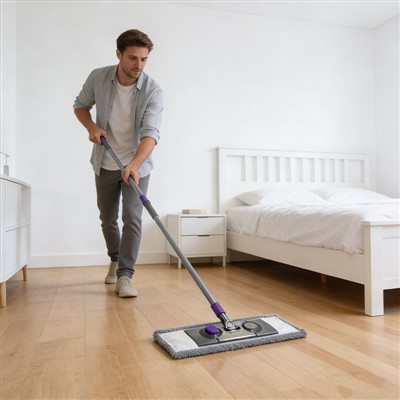
First, let’s get clear on what counts as a “mop accessory” to avoid confusion. When I say accessories, I’m talking about the three core, swappable parts: the mop head (the absorbent, cleaning part you replace), the mop frame (the rigid piece that holds the head in place and connects to a handle), and the mop handle (the long pole that lets you reach floors without bending). That’s not to mention add-ons like wringers (for spin mops), buckets with adjustable slots, and even anti-microbial grips, but those three are where most compatibility issues live. I’ve seen a customer try to slap a string mop head on a spin mop frame, only to have the head slide off mid-clean, leaving a streak across their break room floor. Another time, a nursing home administrator ordered 50 microfiber mop heads for their string mops, because they thought “microfiber is better”—only to learn the frame’s hooks were too short to grab the new head, resulting in a half-hour delay cleaning patient hallways. These aren’t one-off mistakes; they’re the result of mixing accessories across mop types without checking fit.
Let’s start with mop head compatibility, because that’s the part most people swap out first. Mop heads come in two main categories: “clip-on” and “string/twist” styles (plus the spin mop’s “disc” head, but we’ll get to that). Clip-on heads, which are the most common in commercial and residential flat mops, are designed to lock into a frame with two small plastic or metal tabs, called latch prongs. These prongs are sized and spaced differently across brands. For example, our own clip-on heads have a 5-inch prong spread, which fits most standard commercial frames from brands like O-Cedar Commercial and Rubbermaid. But a no-name off-brand mop frame I saw a customer bring in last year had a 6-inch prong spread—our heads’ prongs just didn’t line up. That’s not a flaw in our head; it’s a compatibility gap built into the frame’s design. String mop heads, by contrast, have a loop at the top that wraps around a metal frame or a hook on a handle. If the loop is too small for the hook, or the hook is too flimsy to hold the wet string head (which can weigh 2-3 pounds when saturated), it’ll slip. I once helped a school custodian who’d bought cheap string heads that frayed on the first use, and the loops stretched so wide they couldn’t stay on the handle—she ended up having to buy replacement handles mid-shift, just because she picked the wrong head-loop size.
Then there are spin mop heads, which are a whole separate category. These are disc-shaped, made of microfiber or absorbent cotton, and designed to lock into a spinning base for wringing. Spin mop heads don’t work with clip-on frames, period. The base of a spin head has a plastic “hub” that fits into the spin mechanism on the mop frame; a flat mop frame can’t grab that hub. I’ve had customers try to force a spin head onto a flat frame, and it either breaks the head, damages the frame, or leaves a gap where the head won’t touch the floor evenly. Even within spin mop heads, size matters: a 10-inch spin head won’t fit a frame designed for a 12-inch head, because the base is too small to connect to the spin’s locking pins. Last quarter, I had a customer return 20 spin heads because they bought the wrong size for their existing spin mops—they said the heads “flopped around” instead of spinning, so they had to reorder the right ones, costing them an extra day of cleaning their warehouse.
Now, the mop frame and handle: people often forget these are accessories too, and they’re tied directly to the head. A frame is only compatible with the heads it’s designed to hold. For clip-on frames, that means the length of the frame’s arms and the size of the latch prongs have to match the head’s dimensions. A frame made for a 18-inch flat mop head can’t hold a 24-inch head, because the prongs are too short to reach the head’s edges. Handles are even simpler, but still a source of mismatches. Most mop handles have a standard “male” end that connects to a frame’s “female” socket—this is a rough standard, but some brands tweak the size slightly to prevent cross-compatibility. For example, a handle from Brand A might have a 1-inch diameter male end, while a handle from Brand B has a 1 1/8-inch end, so they won’t screw or snap into each other. I’ve had customers try to use a broom handle as a mop handle, and even though it’s long enough, the end is too thick to fit the frame’s socket—another wasteful, avoidable mistake.
But here’s the good news: compatibility isn’t a mystery, and you don’t have to stick to the exact same brand forever. Over the years, I’ve learned that most commercial mop accessories follow a few universal standards, so long as you know what to look for. For clip-on heads, check the prong spread (measure the distance between the two latch prongs on the head, or the frame) and the head’s length. For string heads, check the loop diameter (if you’re buying a replacement loop, match it to your frame’s hook size) and the weight capacity of your frame—heavy cotton heads need a sturdier frame than light microfiber heads. For spin mops, always match the head’s hub size to your frame’s locking mechanism, and confirm that the spin base fits your bucket’s wringer slot.
I also work with a lot of small businesses and home cleaners who think “all-purpose” accessories exist, but that’s not true. A restaurant owner once told me he wanted a mop head that works for both the dining room (grease-resistant microfiber) and the kitchen floor (heavy-duty cotton)—but a head designed for grease won’t fit the kitchen’s string frame, and the cotton head is too big for the dining room’s flat frame. The key is to match the accessory’s specs to your existing tools, not the other way around. That’s why our team at Mop Accessories suppliers includes a quick sizing guide on every product page, and we answer questions over the phone or email for free—no sales pitch, just helping someone avoid a trip back to the store or a delayed cleaning job.
Another common misconception: “expendable” accessories (like mop heads) can’t be mixed, but durable accessories (frames, handles) can. That’s not true either. I’ve seen a customer use a 5-year-old frame from Brand X with a clip-on head from Brand Y, and it worked perfectly—because the prong spread and head length matched. The problem comes when the specs don’t align, not the age or brand. Durable parts like frames and handles can be reused across different accessory brands, as long as the dimensions line up. That’s why we offer a wide range of compatible heads for common frames, so our customers don’t have to replace their perfectly good frames just because they need a new head.
Now, let’s talk about what happens when you force incompatible accessories. It’s not just a bad fit—its impacts go beyond frustration. For one, it’s a safety risk. A mop head slipping off mid-clean can make someone slip and fall, especially on wet floors in a grocery store or hospital. I’ve heard of a nursing home where a mismatched string mop head slid off the frame, leaving a puddle that caused a resident to fall and break their hip—something that could have been avoided with a 20-second check of loop size. It’s also a waste of money. A mismatched mop head that doesn’t fit is useless, so you have to throw it away and buy the right one. A frame that’s too flimsy for a heavy head will bend or break in a week, costing you more money to replace it than if you’d bought a compatible frame in the first place. And it’s a time drain: a custodian or cleaner who has to stop mid-shift to fix a mismatched accessory is taking time away from their actual job, which means cleaning takes longer, leading to longer wait times for customers or residents.
At the end of the day, the question “Can I use all mop accessories with any mop?” comes down to one simple answer: No, but you don’t have to limit yourself to one brand. The key is to match the specifications of your accessories to your existing mop’s parts, not to assume “one size fits all.” Whether you’re a residential homeowner looking to replace a mop head, a facility manager ordering 100 frames for your office, or a small business owner shopping for affordable, compatible parts, the right fit saves you time, money, and hassle.
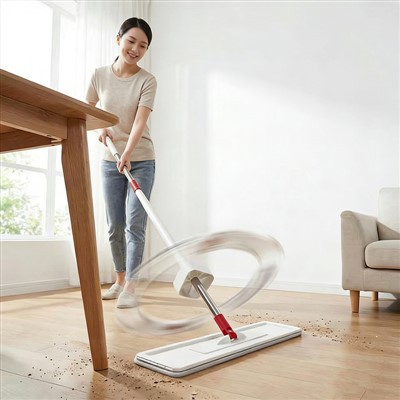
For what it’s worth, I’ve seen every possible mop accessory mismatch in my 12 years in this business, and I’ve helped fix almost all of them. If you’re not sure if a mop accessory will work with your existing tools, reach out to our team. We don’t push products—we give you the straight answer on compatibility, so you can buy what fits, no returns, no delays, no wasted time.
Mop Accessories References:
- American Cleaning Institute. (2022). "Mop Accessory Compatibility Guidelines for Commercial and Residential Use." ACI Industry Standards.
- Rubbermaid Commercial Products. (2021). "Mop Frame and Head Dimension Specifications: Clip-On and Spin Styles." Product Engineering Documentation.
- Occupational Safety and Health Administration (OSHA). (2020). "Slip and Fall Prevention in Janitorial Work: Mop Accessory Safety Protocols." OSHA Workplace Safety Bulletin.
- National Sanitation Foundation (NSF). (2022). "Compatible Mop Systems for Healthcare and Food Service Facilities." NSF Public Health Standards for Cleaning Tools.
Yongkang Zhechu Daily Necessities Co., Ltd.
We’re well-known as one of the leading mop accessories manufacturers and suppliers in China, specialized in providing high quality customized products. We warmly welcome you to buy discount mop accessories in stock here from our factory. Contact us for free sample.
Address: Take Elevator Number 2 to the Fourth Floor of No.58 Hongye Road, Xixi Xishan Industrial Zone, Longshan Town, Yongkang City.
E-mail: 1733131066@qq.com
WebSite: https://www.zcryp.com/
