If you’ve ever stood next to a power plant, a chemical processing facility, or even a large industrial refrigeration unit on a hot summer day, you might have felt the massive, humming air cooled condensers (ACCs) at work—transferring waste heat from process fluids like steam or refrigerant straight into the surrounding air to keep operations running smoothly. As an ACC supplier, I’ve spent thousands of hours walking job sites, answering customer calls, and explaining to clients why choosing the right draft type isn’t just a technical detail—it’s a decision that impacts upfront costs, long-term energy use, and even how well a facility performs in extreme weather. Two of the most common ACC designs are natural-draft and forced-draft condensers, and while their names sound simple, the differences run deep enough to make or break a project. Let me break down what sets them apart, when to pick one over the other, and why getting this right matters for your bottom line. Air Cooled Condenser

First, let’s start with the core job of any air cooled condenser: it takes hot, pressurized vapor (usually steam for power plants, or refrigerant for industrial cooling) and turns it into a liquid by releasing heat to the ambient air. The key difference between natural and forced draft is how that air moves across the condenser tubes to absorb that heat. Natural-draft condensers rely entirely on atmospheric air movement—wind, air density differences, and buoyancy—while forced-draft designs use mechanical fans to push or pull air through the tube bundles. That basic split leads to a cascade of differences in size, cost, efficiency, and use case.
Let’s dive into natural-draft condensers first, because they’re the older, more low-maintenance option. The most recognizable feature of a natural-draft ACC is its massive hyperbolic or hyperboloid-shaped tower—you’ve probably seen these at coal or natural gas power plants, towering hundreds of feet above the facility. The design leverages thermodynamics: when air inside the tower is heated by the condenser tubes, it becomes less dense than the cooler, heavier air outside. That density difference creates a natural buoyancy, pulling the warm, heat-carrying air up and out of the tower, and drawing fresh, cool air in from the bottom. There are no moving parts here—no fans, no motors, no bearings to replace. That’s a huge upside for reliability, especially in remote facilities where maintenance access is limited or power outages are a risk. If a plant loses electricity, a natural-draft ACC will still keep working as long as there’s a slight breeze, because it doesn’t depend on external power to move air.
But that reliability comes with big tradeoffs. The hyperbolic tower needs to be extremely tall—often 300 to 500 feet for a large power plant—because buoyancy alone only creates enough air flow if the height difference is substantial. That means natural-draft ACCs take up a lot of space, both vertically and horizontally around the base of the tower. For a 500 MW power plant, a natural-draft ACC might require a tower that’s 400 feet tall and has a base diameter of 250 feet, with miles of condenser tubes running inside. That size translates to material costs: you need thousands of tons of steel and concrete to build the tower, and the tube bundles have to be sized to account for lower air flow rates. Because air movement isn’t controlled, natural-draft ACCs also perform inconsistently. On calm days, air flow drops, so the condenser can’t reject heat as well—meaning the plant has to reduce its output to avoid overpressurizing the steam system. On hot, still summer days, a natural-draft ACC might be 15 to 20% less efficient than it is on mild, windy days. And if wind blows too hard, it can disrupt the air flow pattern inside the tower, creating what’s called windage loss, where the hot air gets pulled back into the inlet, reducing the amount of cool air available to absorb heat. That’s a tricky problem to mitigate without building large, expensive wind screens around the tower.
Now let’s turn to forced-draft condensers, the design I see more and more clients asking for these days, especially in smaller facilities, retrofits, or sites with limited space. Forced-draft ACCs use large, powerful electric fans—either mounted on top of the tube bundle pulling air up (induced draft) or at the bottom pushing air up through the tubes (forced draft, sometimes called push draft)—to move air across the condenser. Unlike natural-draft designs, the size of a forced-draft ACC is compact. There’s no giant tower; instead, you get a rectangular or cylindrical unit that sits on the ground or even on rooftops. For a 500 MW plant, a forced-draft ACC might be a series of 10 to 15 individual units, each 30 to 40 feet tall and 50 feet wide, spread across a smaller footprint than a natural-draft tower. That space savings is a huge win for sites where land is expensive or the facility is in a dense industrial park—you don’t have to reserve acres for a 400-foot tower.
The mechanical fans give forced-draft ACCs much more control over air flow, which translates to consistent performance. You can adjust fan speed based on ambient temperature, process load, and demand. On a hot day, you can crank the fans up to maximum speed to boost air flow and reject more heat; on a cool night, you can slow them down to save energy. That means forced-draft ACCs are far more efficient than natural-draft designs in variable conditions—especially in hot climates where calm days are common. They also eliminate the windage problem that plagues natural-draft towers, because the fans create a consistent, directed air stream, regardless of external wind speed. There’s a catch here, though: moving parts mean more maintenance. Fans have motors, blades, bearings, and drive systems that need regular upkeep—oil changes, bearing replacements, motor repairs. You also have to supply reliable electricity to run the fans; if there’s a power outage, a forced-draft ACC will stop working unless you have backup generators. That’s a big risk for facilities in areas prone to extended power cuts, though modern designs include redundant fan systems to mitigate that. Upfront costs are also a factor: while the tower structure of a natural-draft ACC is expensive, forced-draft ACCs add the cost of multiple fans, motors, and controls, which can add 20 to 30% to the initial equipment cost for large installations.
To make this even more concrete, let’s walk through two real-world scenarios I’ve encountered with clients. A few years ago, I worked with a coal power plant in rural Wyoming, where land is abundant and power outages are rare, but wind speeds can vary wildly across the Great Plains. The plant already had a natural-draft ACC, but they were looking to expand by 100 MW. We advised them to stick with natural-draft, because expanding a forced-draft unit would require even more fans and electricity, and the remote location meant maintenance support for fans would be harder to access. The natural-draft tower’s existing design was already sized to handle variable wind, and the low operating cost (no fan electricity) made it the clear choice. On the other hand, last year we worked with a small chemical plant in downtown Houston, where every square foot of land cost $100,000, and ambient temperatures regularly hit 100°F in the summer. The plant needed a 200 MW ACC retrofit, and they had to fit it into a 1-acre plot. A natural-draft tower would have taken half their land, so we went with a forced-draft design with six variable-speed fans, which fit into a 0.5-acre footprint and maintained consistent efficiency even on the hottest, calmest days. The extra upfront cost was offset by the space savings, and the variable fan control let them reduce their cooling energy use by 12% compared to their old, inefficient natural-draft system.
Another key difference to consider is air flow rate and heat transfer efficiency. Natural-draft ACCs typically move air at a rate of 5 to 10 feet per second, thanks to buoyancy, while forced-draft designs move air at 10 to 20 feet per second, thanks to the fans. That higher air velocity means more heat is transferred from the process fluid to the air, so forced-draft units can be smaller for the same heat load. For example, to reject 100 MW of waste heat, a natural-draft ACC might need a heat transfer area of 200,000 square feet, while a forced-draft ACC would only need 120,000 square feet, thanks to the faster air flow. That smaller heat transfer area means less material for the condenser tubes, which cuts down on raw material costs—though again, the fan and motor costs usually balance that out.
Environmental factors also play a big role these days. For facilities in areas with strict emissions regulations, natural-draft ACCs can have an edge because they don’t consume electricity for fans, which reduces the plant’s overall carbon footprint. A 500 MW plant with a natural-draft ACC will use about 1-2% of its total output for auxiliary equipment, compared to 3-5% for a forced-draft ACC, because the fans draw power. That’s a significant difference in annual energy costs, especially for a plant operating 24/7. But if a facility is looking to reduce water use (wait, no—ACCs are air cooled, so they use no water for cooling, unlike water-cooled condensers), that’s a win for both, but the efficiency of forced-draft means less energy use. Wait, let me correct that: air cooled condensers don’t require cooling water, so they’re ideal for arid regions where water is scarce, a point I often emphasize to clients choosing between ACCs and water-cooled systems.
Now, common mistakes I see clients make when choosing between the two. Too many people assume natural-draft is always cheaper, but that’s only true for very large installations with abundant land. For small to medium projects, or sites with limited space, the upfront cost of natural-draft can be prohibitive, and the inconsistent performance can lead to lost production. On the flip side, some clients go for forced-draft just because it’s compact, without accounting for maintenance costs over the 20-30 year lifespan of an ACC. A set of fans and motors might cost $50,000 to install initially, but over 20 years, bearing replacements, motor repairs, and electricity costs can add up to $200,000 or more—sometimes more than the initial difference in equipment cost.
As an ACC supplier, my job isn’t to push one type over the other—it’s to match the right design to your specific needs. If you’re building a large power plant in a remote, low-cost land area with reliable power, natural-draft is almost always the best choice for long-term low cost and high reliability. If you’re retrofitting a facility in a dense urban area, or need consistent performance in hot climates where production downtime is expensive, forced-draft is the way to go, especially with modern variable-speed fans that cut energy use. I also recommend hybrid designs for some projects—combining a small natural-draft tower with a smaller forced-draft section to get the best of both: the low maintenance of natural draft, with the controlled air flow of forced draft to handle peak heat events.
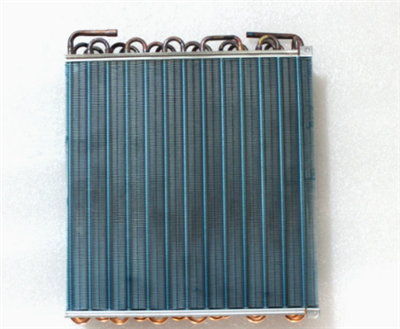
At the end of the day, the difference between natural-draft and forced-draft ACCs comes down to tradeoffs: space vs. reliability, upfront cost vs. long-term operation, consistent performance vs. low auxiliary energy. I’ve seen clients get this wrong, leading to months of downtime or inflated operating costs, and I’ve seen them get it right, cutting annual energy bills by six figures. If you’re in the market for an air cooled condenser, whether it’s for a power plant, industrial refrigeration, chemical processing, or any other application, don’t get stuck on jargon or generic recommendations. Reach out to discuss your project’s site, load, climate, and budget, and I’ll help you pick the design that works best for you.
Finned Tube References
- Engineering ToolBox. “Air Cooled Condensers – Types and Capacity.”
- American Society of Mechanical Engineers (ASME). “Performance Test Code for Air Cooled Heat Exchangers.”
- Nuclear Energy Institute. “Cooling System Design for Power Generation Facilities.”
- Heat Transfer Engineering. “Natural vs. Forced Draft Cooling Systems: Efficiency and Cost Comparisons.”
- Power Magazine. “Trends in Air Cooled Condenser Design for Thermal Power Plants.”
Xiangshui Derkang Refrigeration Equipment Co., Ltd.
Address: No. 2, Xiaojian Town Entrepreneurship Park, Xiangshui County
E-mail: 505745223@qq.com
WebSite: https://www.xsderk.com/
