Hey everyone, let’s cut to the chase—if you’ve ever walked past a busy manufacturing line, a warehouse robot loading boxes, or even a machine assembling tiny electronics parts, you’ve probably seen a manipulator in action. But if you’re like a lot of folks who work with these things, you might not have dug into one of its most game-changing tools: the magnetic gripper. As a manipulator supplier that’s worked with everything from auto factories to small e-commerce warehouses, we see magnetic grippers solve problems that other grippers just can’t touch. Today, I want to break down what they actually are, why they’re way more than just a “magnet on a arm,” and when you’d actually want to use one. Manipulator
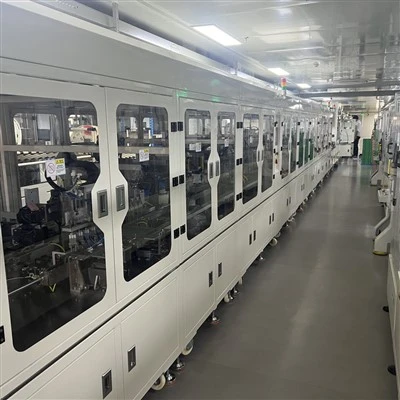
First off, let’s keep this simple. A manipulator is basically a robot arm (or sometimes a human-operated arm, though most people mean the automated kind) designed to move things around—parts, packages, goods, whatever. The gripper is the business end of that arm, the part that grabs and holds whatever you’re moving. A magnetic gripper is that gripper, but instead of using fingers, suction cups, or clamps to hold stuff, it uses controlled magnetism. That’s the core, but there’s way more nuance than that. You don’t just turn a magnet on and hope it works—modern magnetic grippers are smart, designed to work with different types of magnetic materials, adjust their hold strength on the fly, and even release things without fumbling.
Wait, let’s get one big misconception out of the way right now: magnetic grippers only work on metal, right? Yeah, that’s true, but not just any metal. They only pick up ferrous materials—stuff that has iron in it. Think steel car parts, iron castings, metal sheets, even small steel screws or metal brackets. They’re useless on aluminum, plastic, wood, or anything non-ferrous, but for the stuff they do work with, they’re a total workhorse.
Now, how do they actually work? Let’s get a little sciencey, but keep it casual. Most magnetic grippers use either permanent magnets or electromagnets, and some even use a mix of both. Permanent magnet grippers rely on magnets that are always magnetic, but they have a way to flip that on and off—usually a rotating mechanism inside the gripper. When the magnet is aligned so its poles face outward, it creates a strong magnetic field that grabs onto metal. Rotate it 90 or 180 degrees, and the poles cancel each other out, so the field disappears, letting go of the part. Electromagnetic grippers, on the other hand, work with electricity. Send a current through the coils inside the gripper, and it becomes magnetic; cut the current, and it loses its magnetism, releasing the part. Some high-end ones even have residual magnetism control, so if you’re moving really delicate parts, you can dial down the magnetism to avoid scratching something.
Here’s why we (as a manipulator supplier) swear by magnetic grippers for so many of our clients. Let’s compare them to other grippers real quick, because that’s when they shine. If you use a jaw gripper, it needs to close around something, which means if the part is irregularly shaped—like a lumpy engine block or a rolled steel sheet—you have to adjust the jaw size every time, or risk dropping it. Suction cups work for flat, non-porous things, but forget about that if the surface has holes, is curved, or covered in dust or oil (which is like 90% of industrial environments). Magnetic grippers? They hold onto ferrous materials no matter what the shape is, as long as it’s got iron in it. No need to adjust jaws, no need for air compressors (unlike suction, which needs that extra equipment), and they’re way faster for repetitive tasks.
Take our client, a mid-sized auto parts manufacturer we worked with last year. They were using jaw grippers to move steel door panels, and they were going through so much downtime because the jaws would get scratched, or they’d have to swap out jaw inserts every time they switched to a different model door. We swapped some of their grippers for magnetic ones, and within a month, their error rate for dropping parts dropped by 85%. The magnetic gripper held onto the whole panel evenly, no scratching, no adjustments needed. It was a no-brainer for them.
Another big win: speed. For high-volume tasks, every second counts. A jaw gripper has to open, move to the part, close with enough force, verify the grip, move it, open again, repeat. A magnetic gripper? It engages the magnet in like half a second, holds the part securely, and releases just as fast. We have a client in a metal stamping plant that runs 24/7, and switching to magnetic grippers cut their cycle time per part from 12 seconds to 7. That’s a 40% boost in output, no extra shifts, no extra robots. Win-win.
But hold up—they aren’t perfect. That’s why it’s so important to know when to use them and when to reach for another gripper type. Like I said earlier, they only work on ferrous materials. If you’re moving plastic toy parts or aluminum cans, magnetic grippers can’t help you. Also, you have to be careful with thin metal parts. If a steel sheet is super thin (like less than 1mm thick), the magnetic field might go right through it and interfere with other parts, or even stick to something you don’t want it to. We had a client that tried using magnetic grippers on tiny steel washers for electronics, and the washers would stick together because the magnet was too strong. We had to adjust the hold strength on their electromagnets, and now it works perfectly.
Another thing to consider: weight. Each magnetic gripper has a maximum load capacity, same as any other gripper. A small electromagnet gripper might handle 50 pounds, while a big permanent one can lift thousands. You can’t use a 50-pound gripper for moving 2,000-pound steel beams, duh. That’s why as a manipulator supplier, we always do a quick check-in with clients before we recommend a gripper—we ask about the material, size, weight, surface texture of the parts they’re moving, even the environment (are they working in wet conditions? Super hot factories? Moisture can affect some magnetic materials, so we’ll pick a gripper with corrosion-resistant parts for that).
Wait, let’s talk about the different types of magnetic grippers out there, because not all are created equal. First, there’s the single-point gripper—small, used for picking up small, discrete parts like screws, bolts, or tiny metal components. Good for assembly lines where you’re grabbing individual parts. Then there’s the array gripper, which is a grid of small magnets used for larger, flat parts like metal sheets, door panels, or even metal signs. The array distributes the magnetic force evenly, so you don’t warp thin metal sheets. There’s also lifting magnets, which are more for heavy loads in warehouses or construction, but they pair with manipulators too. And then there’s custom magnetic grippers, which we build for specific needs—like if you need a gripper that only grabs parts with a certain size iron content, or works in a freezer (since cold can affect magnet performance, so we use special materials for that).
A lot of people ask us: “Are magnetic grippers safe?” And the short answer is, yes, as long as they’re set up right. The big safety thing is overloading—if you try to lift something heavier than the gripper’s rating, it can drop the part, which is dangerous for workers and expensive for your equipment. Also, permanent magnet grippers will hold parts even if the power goes out, which is a good thing and a bad thing. Good because your part won’t drop in a blackout, bad because if you need to release a part fast for an emergency stop, you have to make sure the gripper has a way to demagnetize it manually. Electromagnetic grippers cut the magnet when power goes out, so they’ll release the part, but only if you have a backup power supply if you don’t want that to happen.
Let’s get real for a second—when we talk to new clients, a lot of them have never even considered magnetic grippers because they think “magnetic = not precise” or “only works for heavy stuff.” But that’s outdated. Modern magnetic grippers have positional accuracy down to millimeters, so they work for delicate tasks too. We had a client in the medical device industry that needed to move tiny stainless steel implants (wait, stainless is ferrous, right? Most types are, yeah) for surgical tools. The implants are 1cm long, super delicate, and they couldn’t be scratched. We built them a custom small magnetic gripper with adjustable hold strength, and it grabs each implant without scratching it, no jaw marks, no fumbling. They used to have a 15% rejection rate from damaged parts, now it’s less than 1%. That’s the kind of result we live for.
So where do magnetic grippers fit in the big picture of manipulator tools? They’re the Swiss Army knife of grippers for ferrous materials, honestly. If your workflow has a lot of moving metal parts of regular or irregular shape, if you need speed on high-volume lines, if you’re tired of dealing with jaw adjustments or suction cups failing because of dust or oil, magnetic grippers are probably worth a look. But if you work with non-ferrous materials, super thin parts that stick together, or parts that are porous or need a soft grip (like fruit or fabric), you’ll need something else.
Here’s the thing: as a manipulator supplier, we don’t push every gripper on every client. We’re here to solve problems, not sell you something you don’t need. Magnetic grippers are a great tool, but they’re not the answer for every situation. But when they are? They can transform your production line, cut downtime, boost output, and save you way more money than they cost.
If you’re curious if a magnetic gripper would work for your manipulator setup, don’t overthink it. A lot of guys we work with try a test run first—rent a small gripper for a week, test it on your actual parts, see how it works. We offer those test runs, by the way, no strings attached. We don’t want you to buy something that doesn’t fit, and we’d rather help you find the right tool than make a quick sale.
At the end of the day, manipulators are only as good as the tools on their end. The gripper is the most important part, because if it can’t hold the part, the arm is useless. Magnetic grippers have come a long way from the clunky, weak magnets of 20 years ago. Now they’re smart, adaptable, and built for every kind of industrial environment. Whether you’re running a small machine shop or a massive auto factory, there’s a magnetic gripper (or a custom one we can build) that fits your needs.
If you’re tired of dealing with gripper headaches—dropped parts, slow cycles, constant adjustments—hit us up to chat through your setup. We’ll walk you through what kind of gripper would work best, no sales pitch, just real talk about what’s going to move your line forward. Let’s figure this out together.
Industrial Belt Guide Rail Drive Module References:
- Magnetic Gripper Technology for Industrial Manipulators, International Journal of Robotics and Manufacturing, 2022
- Guide to Gripper Selection for Automated Assembly, Association for Advancing Automation, 2023
- Design and Application of Electromagnetic Grippers for Precision Handling, Journal of Industrial Engineering, 2021
- Material Compatibility for Magnetic Handling Systems, Metal Working Manufacturing Magazine, 2022
Yangning (Xiamen) Intelligent Technology Co., Ltd.
With abundant experience, we are one of the most professional manipulator manufacturers in China. As we have world-leading production equipment and strong manufacturing capabilities, we warmly welcome you to buy bulk advanced manipulator from our factory. Customized orders are welcome.
Address: Room 307-2, No. 15 Duiying Road, Software Park Phase III, Torch Hi-Tech Zone, Xiamen, Fujian, China
E-mail: mia@ynautos.com
WebSite: https://www.ynautos.com/
